

The LatinNews Podcast is a fortnightly deep dive into key developments from across Latin America and the Caribbean.
Real insights from the region’s sharpest minds.
Stream the latest episodes on YouTube, Spotify, Apple Podcasts, and more.
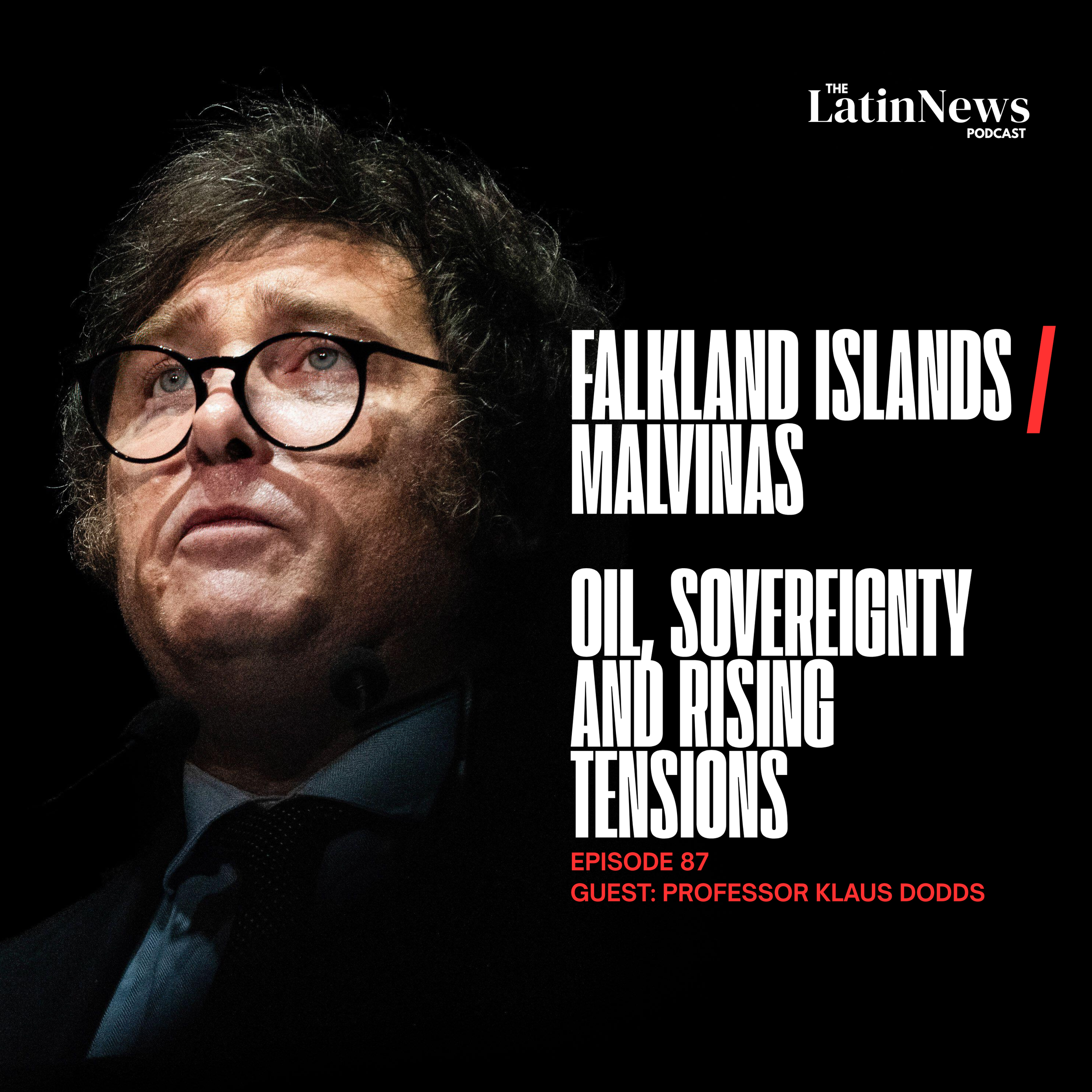
Season 1 | Episode 87
The Falkland Islands / Malvinas sovereignty dispute is entering a new period of geopolitical uncertainty, with shifting international alliances and plans for offshore oil production raising questions about the future of the islands.
In this episode of The LatinNews Podcast, Richard McColl speaks with Professor Klaus Dodds, Professor of Geopolitics at Middlesex University and Senior Research Fellow at RAND Europe, about the historical roots of the dispute, Argentina's relationship with the United States under President Javier Milei, and the strategic importance of the South Atlantic.
The discussion examines the proposed Sea Lion oil project, Argentina's efforts to increase diplomatic, legal and economic pressure, and the challenges facing the United Kingdom in maintaining its position in the region. With Argentina's 2027 presidential election approaching, Dodds considers how these developments could reshape the dispute without necessarily leading to military confrontation.
Listen and subscribe to The LatinNews Podcast on Apple, Spotify and other platforms
-
In this episode we discuss:
• The Falkland Islands / Malvinas dispute and the 1982 war
• How Milei and Trump could influence the dispute
• The Sea Lion oil project and Argentina's opposition
• What lies ahead for the UK, Argentina and the islanders
-
Professor Klaus Dodds
Professor Klaus Dodds is Professor of Geopolitics and Dean of the Faculty of Science and Technology at Middlesex University London, and a Senior Research Fellow at RAND Europe. His research focuses on geopolitics, territorial disputes, international security and the polar regions, with particular expertise in the South Atlantic and Antarctica.He has authored and co-authored numerous books, including "Pink Ice: Britain and the South Atlantic Empire" (2002), "Border Wars: The Conflicts That Will Define Our Future" (2021), and "Unfrozen: The Fight for the Future of the Arctic" (2025), co-written with Mia Bennett.

The LatinNews Podcast is hosted by Richard McColl, a foreign correspondent in Colombia. Having first travelled to Colombia in the late 90s, McColl made the move to Bogotá in 2007. He holds a Diploma in Conflict resolution and a PhD in Social and Human Sciences both at Pontificia Universidad Javeriana in Bogotá. He has worked as a journalist across Latin America.
Political Analyst, Richard McColl